Réduire le gaspillage alimentaire en épicerie par l'innovation industrielle

Impacts
- Deux causes profondes du gaspillage identifiées par la recherche
- Prototype grandeur nature validé avec des employés d’épicerie
- Plan d’affaires go-to-market développé en parallèle du produit
- Prix d’entrepreneuriat reçu pour la stratégie de design et de commercialisation

Mon rôle
- Dirigé la recherche utilisateur avec employés d’épicerie et parties prenantes
- Réalisé toutes les esquisses de design industriel et présentations visuelles
- Validé le prototype grandeur nature en environnement de vente réel
- Co-rédigé le plan d’affaires pour une éventuelle commercialisation

Contexte du projet
Un projet de fin d'études d'un an sur le gaspillage des fruits et légumes
En 2019, les plus grands distributeurs alimentaires canadiens s'engagent à réduire leur gaspillage alimentaire de 50% d'ici 2025. En 2022, Sobeys avait atteint 44% de cet objectif. L'horloge tournait.
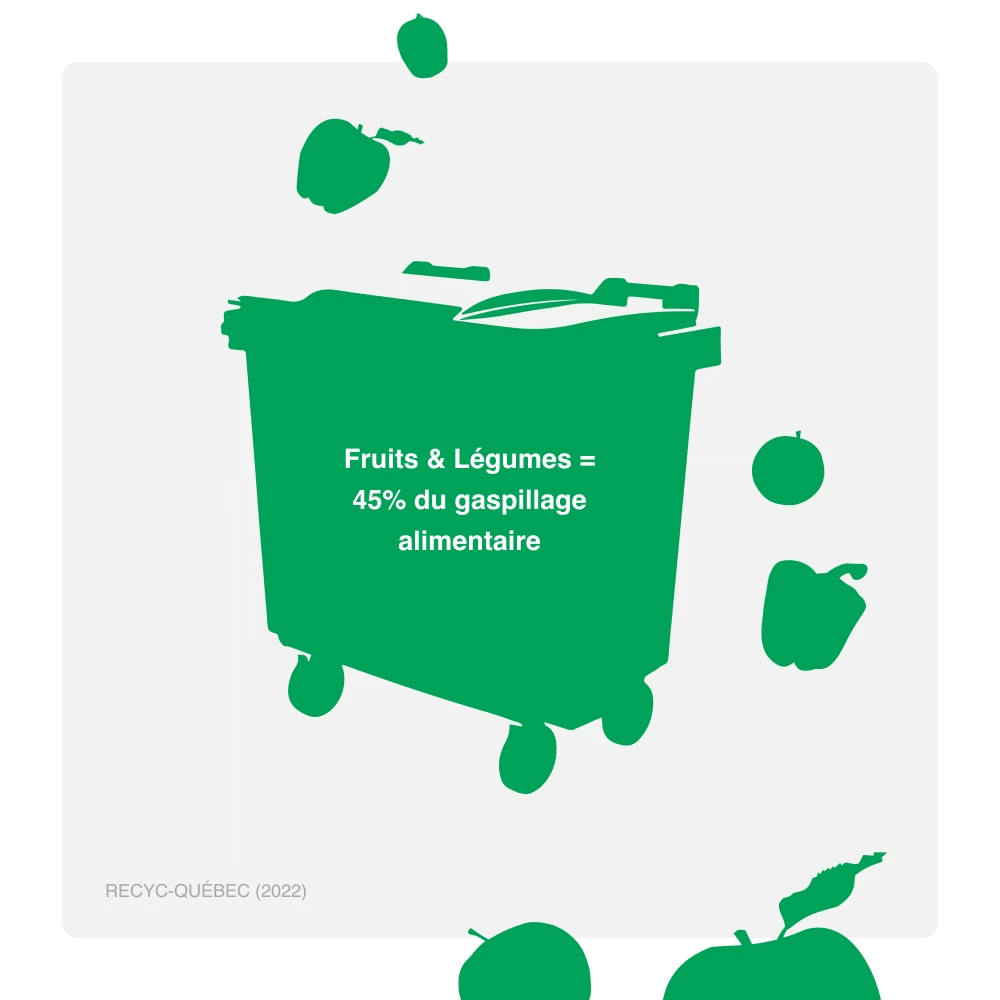
Les fruits et légumes représentent 45% du gaspillage alimentaire total au Québec, et leur prix a augmenté de 13,2% entre 2021 et 2022. Pour mon projet de fin d'études en design industriel à l'Université Laval, ma coéquipière Charlotte Conseiller et moi avons choisi de travailler directement sur ce problème : le gaspillage des produits frais dans les épiceries à grande surface, abordé sous un angle de design.
Recherche et découverte
Identifier les vraies causes du gaspillage
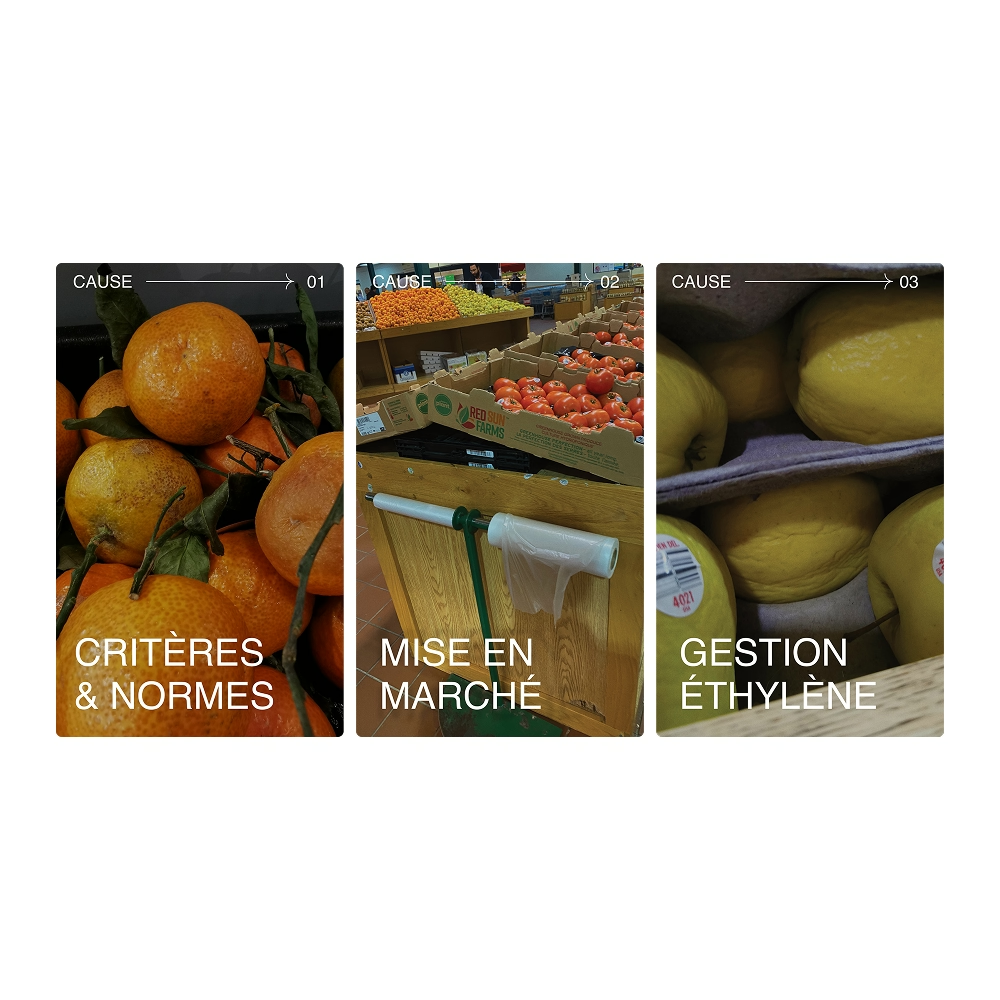
Nous avons passé le premier semestre sur le terrain. Nous avons visité neuf épiceries réparties entre cinq bannières de service et quatre bannières à escomptes, observé les flux de travail, photographié les équipements et mené des entretiens semi-dirigés avec deux directeurs d'épicerie, un commis aux fruits et légumes, une responsable du gaspillage alimentaire chez Sobeys et une conceptrice de mobilier spécialisée en présentoirs de fruits et légumes.
Deux causes de gaspillage se sont révélées comme les plus actionnables.
La première était biologique. Les fruits climactériques, dont les bananes, avocats, pommes, poires, pêches et tomates, produisent de l'éthylène lors de leur maturation. Dans les bacs en vrac où les produits sont empilés les uns contre les autres, un fruit trop mûr accélère la maturation de tout le lot. Une pomme pourrie fait littéralement pourrir les autres.
La deuxième cause était opérationnelle. Les épiceries font face à une grave pénurie de main-d'oeuvre. La rotation, qui consiste à déplacer les produits plus vieux vers l'avant et les nouveaux stocks vers l'arrière, est censée se faire quotidiennement. En pratique, quand le personnel manque, elle est sautée ou remplacée par un simple remplissage. Un commis nous l'a dit directement :
Si l'un de nous ne rentre pas au travail, c'est certain que les fruits en écopent. On a déjà pas assez de temps pour faire les tournées de fraîcheur comme il faut.
Il y avait aussi une tension commerciale intégrée au système. Les consommateurs s'attendent à ce que les bacs soient pleins et abondants. Une représentante de Sobeys l'a formulé clairement :
Si les clients n'exigeaient pas la perfection visuelle des fruits et une abondance de l'offre, on changerait probablement nos méthodes. Nous nous adaptons directement à ce que les clients veulent.
Des bacs qui semblent vides font fuir les ventes. Les épiceries sur-stockent donc, ce qui accélère la maturation par concentration d'éthylène.
La solution
Un bac de présentation qui ralentit le mûrissement et simule l'abondance
Pomona est un bac de présentation en vrac repensé qui s'attaque aux deux causes à la fois.
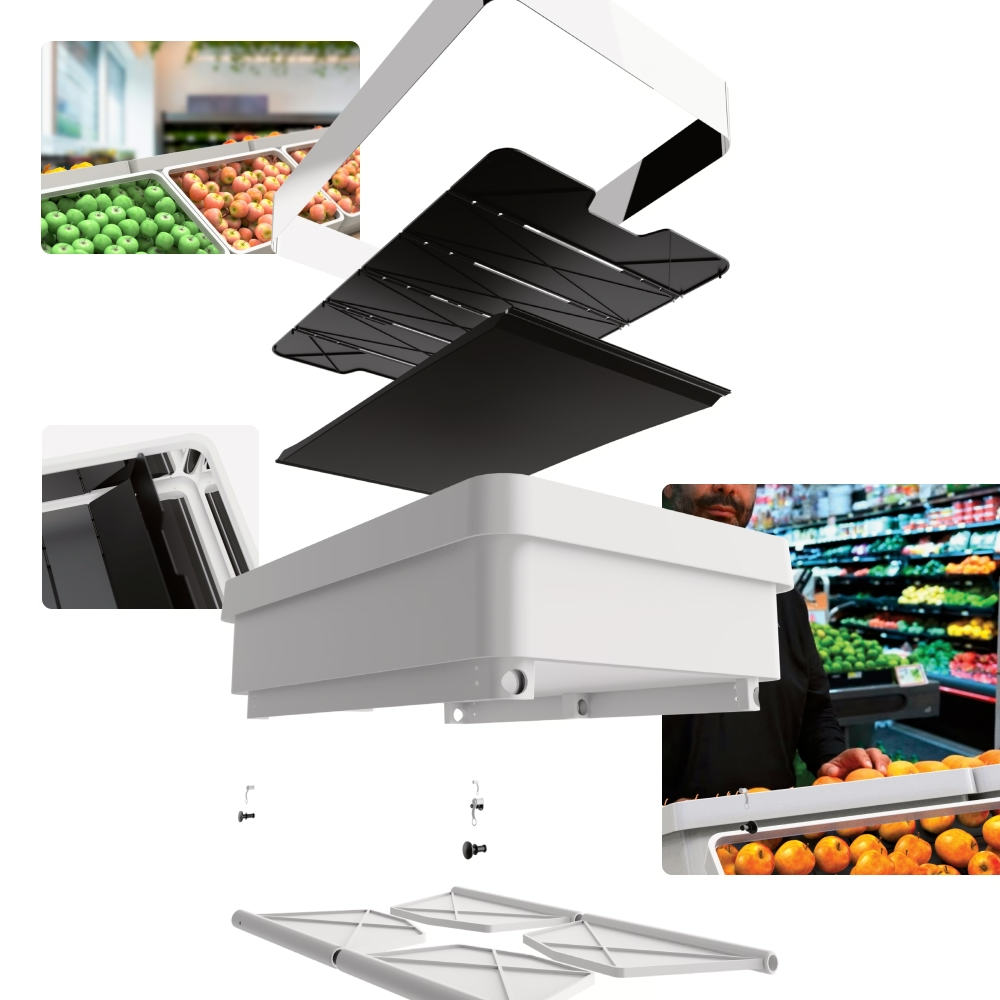
Le bac intègre un double fond contenant des billes de permanganate de sodium dans un sachet en Tyvek. Le permanganate de sodium oxyde l'éthylène et le rend inerte. Le sachet est divisé en six panneaux articulés qui peuvent se soulever individuellement, permettant aux commis de changer l'agent absorbant sans vider le bac. En test, un sachet de Tyvek immergé a tenu plus de 48 heures sans se dégrader. Le contact avec l'eau n'était pas un problème.
Des miroirs courent le long des parois intérieures du bac à 90 degrés. Ils créent un véritable doublement visuel des produits visible sous n'importe quel angle : de face, de profil ou en biais. Lorsqu'un bac n'est qu'à moitié plein, les miroirs maintiennent l'apparence d'abondance. Cela compense directement le manque de personnel : quand la rotation est sautée, l'effet visuel compense partiellement.
Le bac intègre aussi un système d'élévation à trois positions, à plat, horizontal à 25 degrés ou vertical, grâce à des pattes en plastique imbriquées et un mécanisme de verrouillage par épinglette. Cela permet au bac de s'adapter à n'importe quelle configuration de présentoir existante, quelle que soit la disposition du magasin ou le type de bannière, sans nécessiter de mobilier sur mesure.
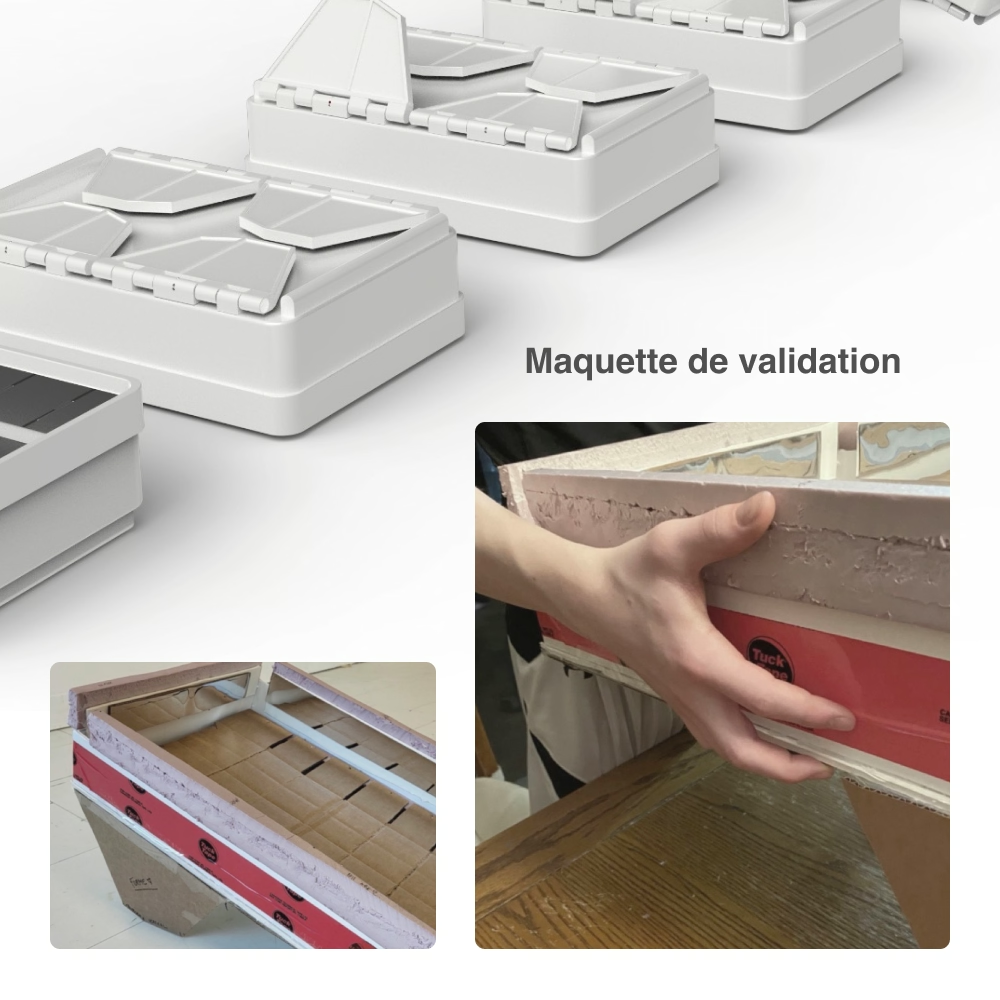
Lors de la validation avec de vrais commis, dont un commis de 16 ans et un gérant de plancher, le format standard de 40 x 60 cm a été confirmé comme compatible avec les tables de présentation existantes. Aucune nouvelle étape de travail n'a été introduite.
Décisions clés et compromis
Utiliser une technologie éprouvée plutôt que d'en développer une nouvelle
Le choix d'utiliser la technologie d'absorption d'éthylène existante plutôt que de développer un nouveau composé était délibéré. Le permanganate de sodium est un matériau établi et disponible. Sa propriété intellectuelle est limitée à des méthodes d'application spécifiques, pas au composé lui-même. S'appuyer sur une science éprouvée nous a permis de concentrer notre travail de design sur ce que nous seuls pouvions résoudre : l'intégration dans un environnement réel d'épicerie.
Concevoir le système de miroirs pour la réalité commerciale
La stratégie des miroirs a nécessité sa propre validation. Les premiers prototypes utilisaient un film miroir, qui causait une distorsion de l'image due aux ondulations de surface du matériau. Nous avons opté pour un miroir rigide en polycarbonate, qui offre une réflexion nette, résiste aux chocs sans se briser et répond aux exigences de durabilité d'un environnement commercial.
Intégrer le service dans le modèle de produit
Étant donné que le roulement du personnel est une cause profonde du gaspillage, se fier entièrement aux employés du magasin pour changer le sachet absorbant chaque mois constituait un point de défaillance connu. Le modèle de Pomona inclut une visite de service mensuelle : un employé Pomona se charge de l'échange du sachet et du nettoyage du bac. Cela maintient le système fonctionnel même lorsque le personnel en rayon est peu fiable.
Commercialisation
Concevoir un chemin vers le marché
Nous avons développé un plan d'affaires complet en parallèle du produit. En se basant sur une pénétration de 5% chez Sobeys seulement, soit environ 75 magasins à 25 bacs chacun, la production initiale serait de 1 875 unités. Quatre moules d'injection à 50 000$ chacun représentent l'investissement initial de 200 000$ en outillage. À 10$ par bac par mois en frais de service, avec des coûts opérationnels de 1,62$ par bac par mois, le modèle atteint le retour sur investissement en 11 mois.
Sobeys avait déjà été identifié comme cible principale à travers le processus de recherche. La prochaine étape serait de reprendre contact avec leur équipe d'acquisition pour initier un projet pilote.
Résultats et conclusion
Le bon design vit dans le système qui l'entoure
Le prototype a été validé à pleine échelle dans de vrais environnements d'épicerie. Le plan d'affaires a valu au projet un prix d'entrepreneuriat.
Pomona fonctionne parce que la recherche était assez précise pour identifier les bons problèmes. La concentration d'éthylène dans les bacs en vrac et le manque de rotation faute de personnel ne sont pas le même problème, et ils nécessitent des interventions différentes. Le bac résout les deux sans demander aux employés de modifier leur façon de travailler.
Le projet de fin d'études s'est terminé avec un produit validé, un prototype fonctionnel et un chemin crédible vers le marché. La prochaine étape serait de trouver un partenaire manufacturier ou une chaîne d'épiceries prête à réaliser un vrai projet pilote.
Envie d'échanger ?
La porte est ouverte