0 → 1 Community platform for training and exclusive offers

Impacts
- Training and offers platform launched and live
- Member discoverability improved via strategic UX separation
- Content pipeline automated, reducing operational overhead
- Phase 2 roadmap in place with cross-content linking

My Role
- Full ownership of the project from strategy to shipping
- Ran usability testing protocol with 12 members
- Directed design team across UI, branding, and prototypes
- Architected CMS structure and automation with developers
Project Context
Building a training and offers platform for a business community
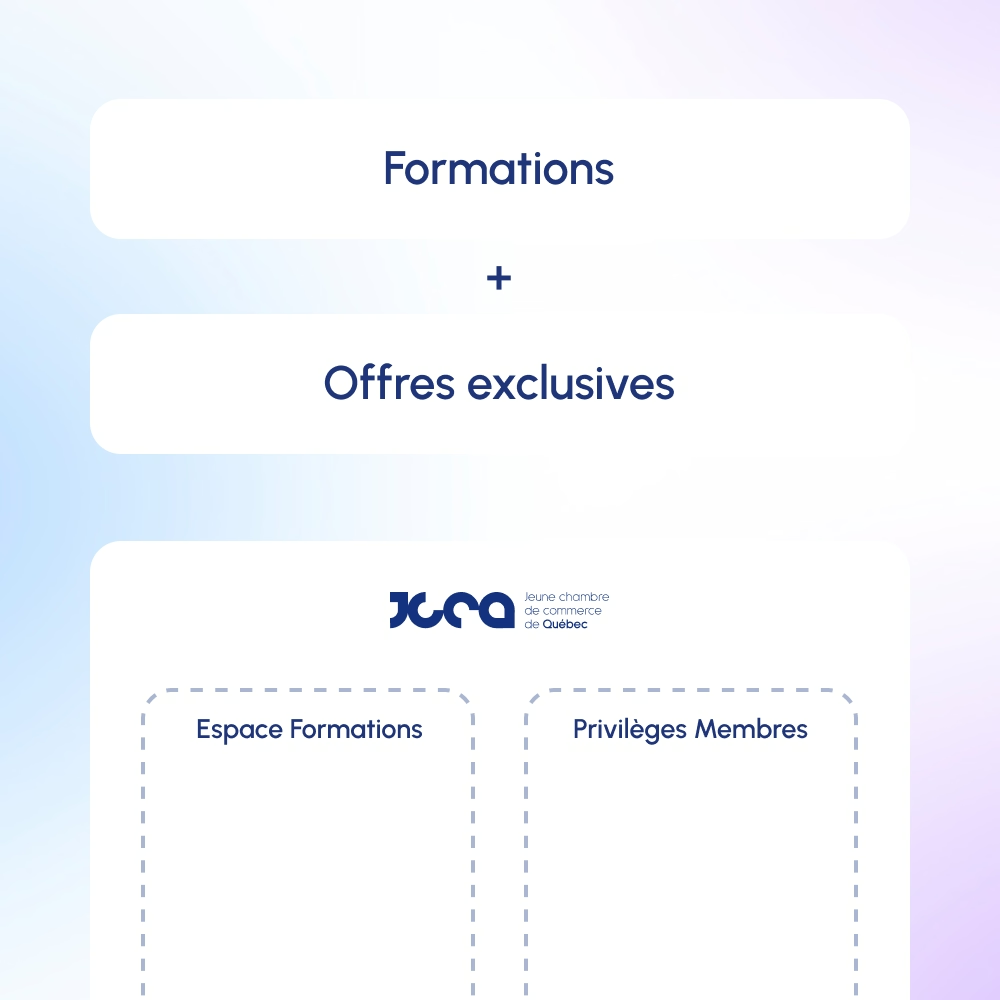
We were approached by the Québec Youth Chamber of Commerce as their technological partner. They wanted a single platform where members could discover and consume training opportunities and exclusive offers. Both functions needed to live on their website, and the initial thinking was to bundle them together under one umbrella.
From the start, the project involved four distinct user journeys: members offering training, members consuming training, members posting offers, and members consuming offers. Designing for that range of intents, on a single platform, while keeping the experience clear for each type of user, was the central challenge.
The goal was clear: make it easier for members to access value. But the path to get there required research first.
Research and Strategic Pivot
Testing the initial assumption
We conducted user research with twelve representatives from the community. The experimental design focused on understanding how members would navigate and perceive value in a combined training and offers experience.
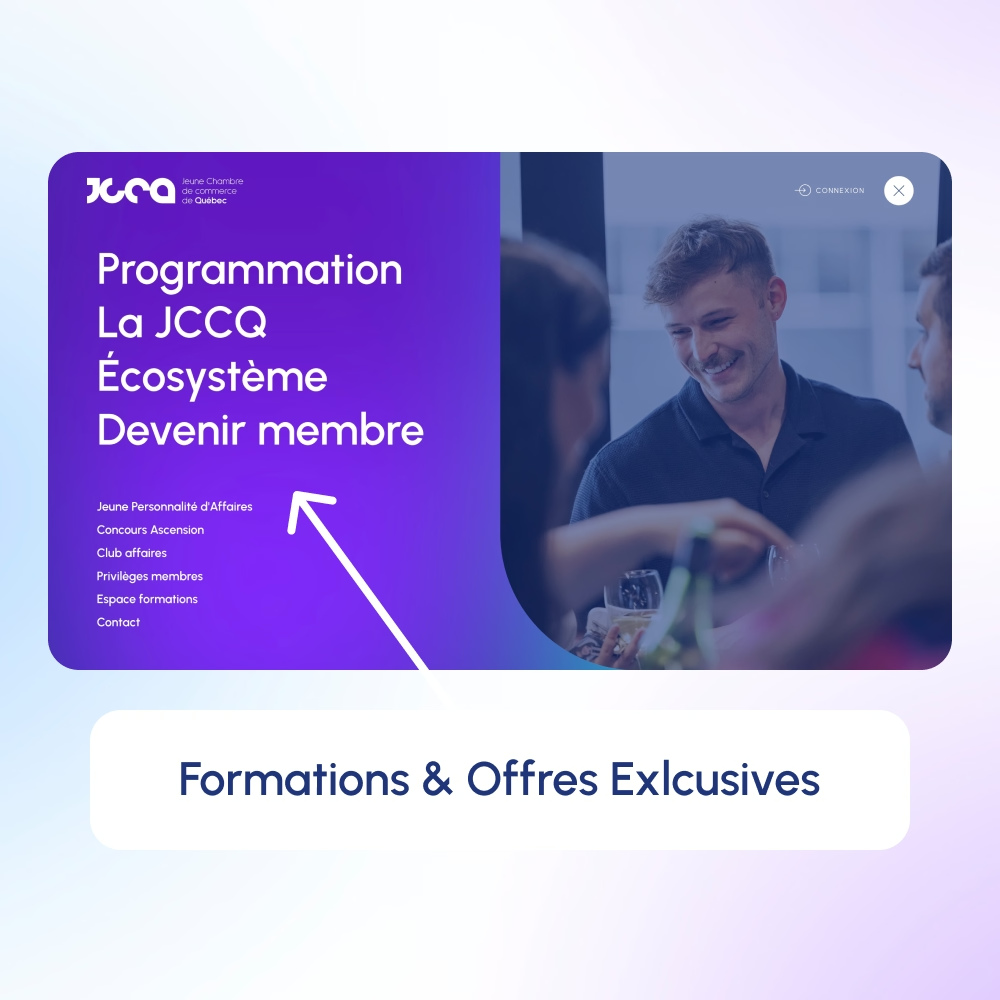
The findings were definitive: separating the two functions made the value proposition much clearer. When training and offers were bundled, members struggled to understand what each section was for. The moment we split them, comprehension improved and perceived value increased.
But here was the risk: the client had initially wanted them together. Presenting a recommendation to change direction required more than just data. We needed to show them how to bring the functions back into conversation later.
The solution was Phase 2 thinking. We showed them that once enough content existed, related sections could surface on offer pages showing associated trainings, and vice versa. Members could discover connections between offerings from the same organization without sacrificing clarity at the entry point. They loved it. The change in direction was approved, and it actually increased their confidence in the final product.
Design and Branding
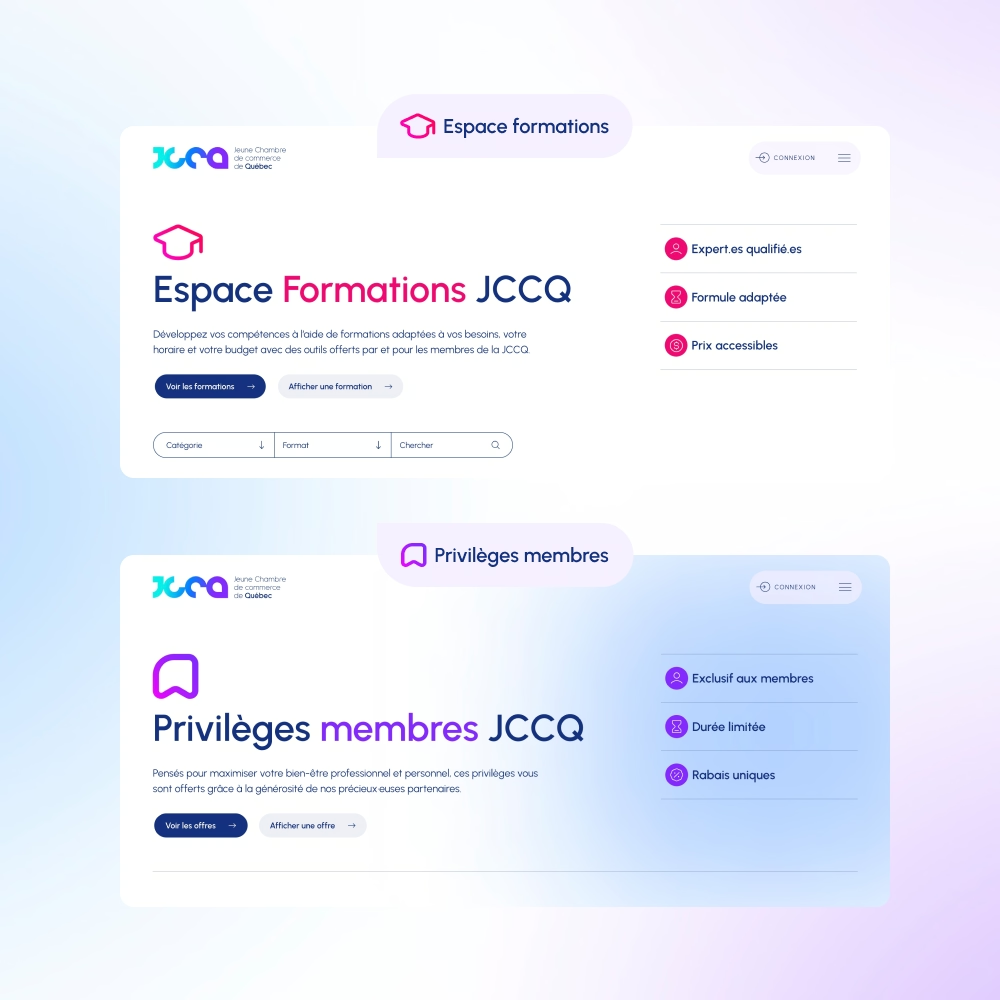
Visual identity for two distinct functions
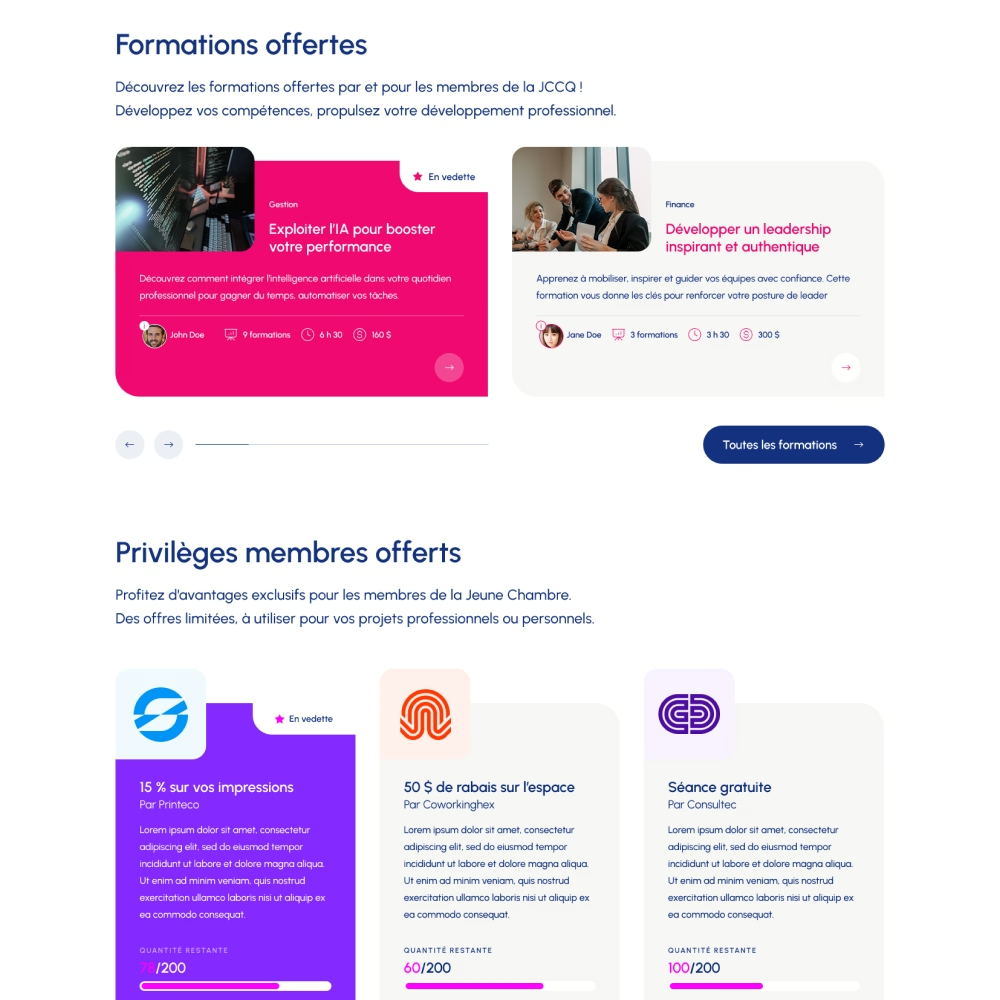
With the strategic direction clear, we moved into design. Part of that included developing distinct visual identities for each function. We created two separate iconographies, color palettes derived from the Chamber's brand, and a cohesive but differentiated design system.
I led the design team throughout this phase. They executed wireframes and built functional prototypes in Figma based on the research insights. My role was to direct that work, ensure consistency with what we learned in research, and maintain quality across both experiences.
Usability Testing and Iteration
Refining through observation
Low-fidelity wireframes were tested and validated internally first, reviewed by UX experts and informed by data from the initial community surveys. We then ran usability testing sessions on the high-fidelity Figma prototype with community members using think-aloud methods. I led the sessions, actively observing behavior, rewatching recordings, and noting where effort was too high or discovery felt unclear.
Key changes that came out of testing:
- Critical sections were moved higher on the page to improve discoverability
- Sticky call-to-action buttons with reveal animations were added to surface new functions as users scrolled
- Onboarding modals with animated GIFs were created to explain each function clearly for first-time users
These changes were direct responses to what we observed. People needed help understanding what was new and where to start.
Key Decisions and Trade-offs
Splitting to clarify, planning to reconnect
The central trade-off was between the client's initial vision (one unified platform) and what the research showed would actually work better (two distinct experiences). Rather than simply recommending a split, we reframed the decision as Phase 1 versus Phase 2. Phase 1 establishes clarity. Phase 2 brings the functions back into conversation through smart content linking. That positioning made the change feel like evolution, not a rejection of their original idea.
Leveraging scarcity and batch logic to drive engagement
One deliberate strategic decision that came directly out of the initial surveys was building scarcity and batch logic into the platform. Survey data helped us understand both how much content the community would realistically supply and what volume members would consume. Based on that, we designed scarcity mechanics for limited offers to drive engagement and urgency, and batch logic to process member submissions cleanly without manual bottlenecks.
Balancing research rigor with a small sample
We tested with twelve members, a small sample by academic standards. We knew statistical significance was limited, so we leaned into a qualitative approach: observed behavior, effort levels, and comprehension patterns. The findings were clear enough to drive concrete design decisions, and the client understood the pragmatic value of that approach.
Extending ownership into backend systems
A deliberate choice was to stay involved beyond UX and design into the CMS architecture and automation logic. This meant more time on my end, but it ensured the backend matched the UX intent exactly. I worked closely with developers to design the CMS structure, build the automation pipelines, and run QA across both front end and backend systems.
Backend Architecture and Automation
Minimizing operational overhead through systems design
We mapped four distinct user journeys: members offering training, members consuming training, members posting offers, and members consuming offers. Each journey required backend automation to function without constant manual intervention from the Chamber's team.
The systems we built handled automatic CMS entry and publishing of member submissions, scarcity enforcement for limited offers to drive engagement, and an onboarding pipeline that processed requests without requiring manual review. The result was a platform the Chamber could run without turning content management into a daily task for their marketing team.
Results
Live platform, satisfied client, roadmap in place
The platform launched and is actively being used by Chamber members. Client satisfaction was high throughout and at delivery. The Phase 2 roadmap is already taking shape, with the Chamber now understanding how to layer in cross-content relationships as adoption grows.
Conclusion and Learnings
Designing for a soft launch, preparing the field for what comes next
This was a Phase 1 launch by design. The goal was never to spike engagement overnight. It was to ship a solid, well-structured platform that members could start using and that the Chamber's team could manage without friction. That is what we delivered.
The systems and assets we built were designed with intensive marketing in mind. The automation pipelines, the onboarding flows, the scarcity logic, all of it is ready to support a full push when the Chamber ramps up their member communication. Phase 2 is already taking shape, and the platform is set up to scale into it.
The main learning: a launch strategy should be part of the conversation at kickoff, not something left implicit. Aligning early on what promotional lift accompanies a platform launch sets clearer expectations and gives the design team the right frame for the work.
Want to connect?
The door is open