Reducing food waste in grocery stores through industrial innovation

Impacts
- Two root causes of produce waste identified through research
- Full-scale prototype validated with grocery store workers
- Go-to-market business plan developed alongside the product
- Entrepreneurship award received for design and commercialization strategy

My Role
- Led user research with grocery workers and industry stakeholders
- Created all industrial design sketches and visual presentations
- Validated full-scale prototype in real retail environments
- Co-authored business plan for potential commercialization



Project Context
A year-long capstone on produce waste in grocery stores
In 2019, Canada's largest grocery retailers committed to cutting food waste by 50% by 2025. By 2022, Sobeys had reached 44% of that goal. The clock was running.
Fruits and vegetables account for 45% of total annual food waste in Quebec, and their price rose 13.2% between 2021 and 2022. For my industrial design capstone at Université Laval, my teammate Charlotte Conseiller and I chose to work directly on this problem: produce waste in large-format grocery stores, approached from a design angle.
Research and Discovery
Finding the real drivers of produce waste
We spent the first semester in the field. We visited nine grocery stores across five service and four discount banners, observed workflows, photographed equipment, and conducted semi-directed interviews with two grocery directors, a produce clerk, a Sobeys food waste manager, and a furniture designer specializing in grocery display equipment.
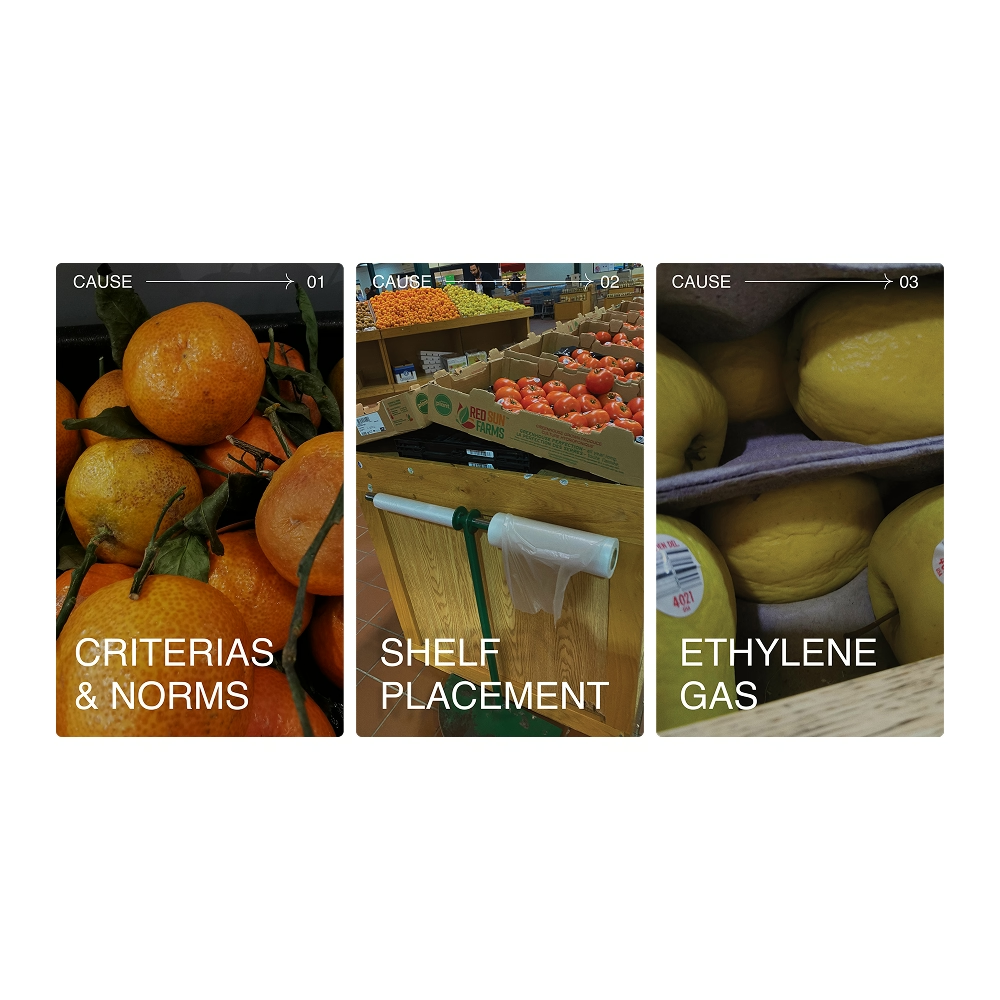
Two causes of produce waste emerged as the most actionable.
The first was biological. Climacteric fruits, including bananas, avocados, apples, pears, peaches, and tomatoes, produce ethylene gas as they ripen. In bulk bins where produce is stacked closely together, one overripe piece accelerates ripening across the entire lot. A rotten apple does literally spoil the others.
The second cause was operational. Grocery stores are facing a serious staffing shortage. Rotation, moving older produce to the front and newer stock to the back, is supposed to happen daily. In practice, when staff are short, it gets skipped or replaced by simple restocking. One produce clerk told us directly:
If one of us doesn’t come in, the fruit pays for it. We already don’t have enough time to do the freshness rounds properly.
There was also a merchandising tension baked into the system. Consumers expect bins to look full and abundant. A Sobeys representative put it plainly:
If customers didn’t demand perfect-looking fruit and abundance, we’d probably change our methods. We adapt directly to what customers want.
Empty-looking bins drive lost sales. So stores overstock, which accelerates ripening through ethylene concentration.
The Solution
A produce display tray that slows ripening and simulates abundance
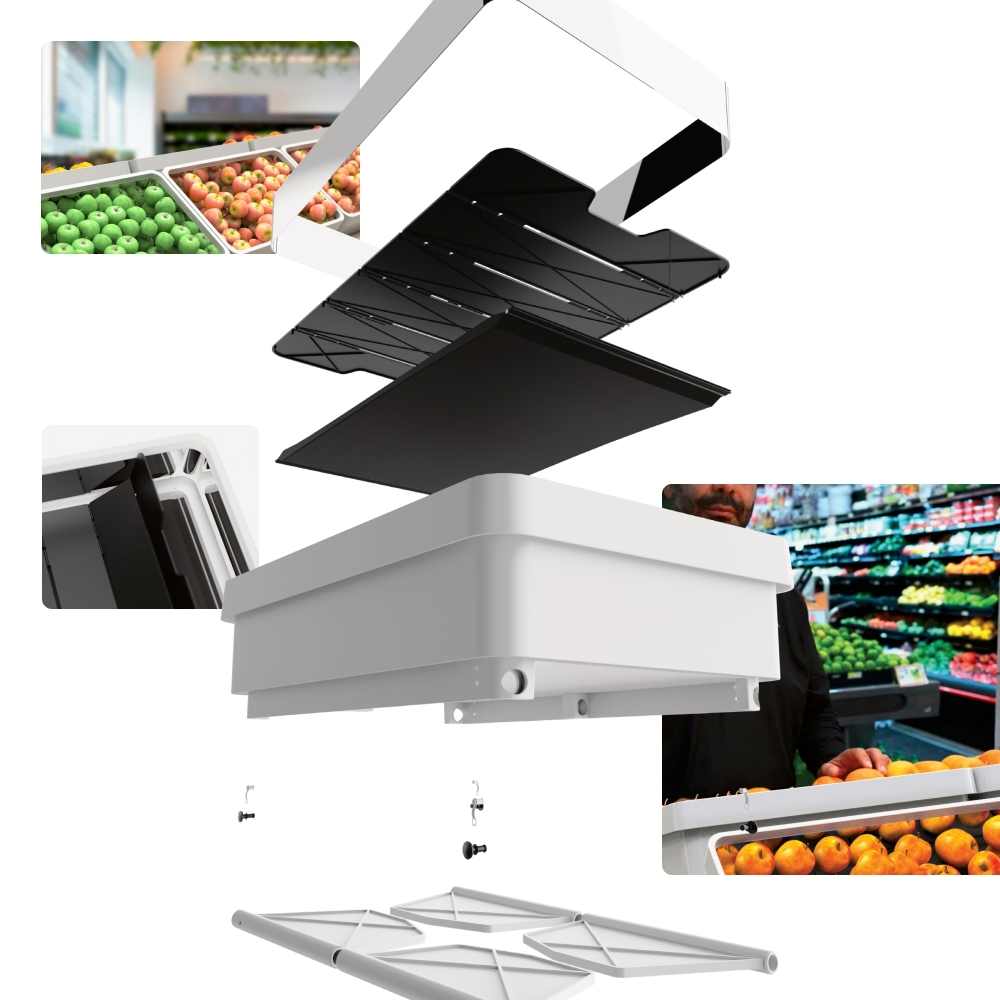
Pomona is a redesigned bulk produce bin that addresses both causes at once.
The bin integrates a false bottom containing sodium permanganate beads in a Tyvek pouch. Sodium permanganate oxidizes ethylene gas, rendering it inert. The pouch is divided into six hinged panels that can be lifted individually, so staff can swap the absorbent without emptying the bin. In testing, a submerged Tyvek pouch held up for more than 48 hours without degrading. Water contact was not a concern.
Interior mirrors run along the inside walls of the bin at 90 degrees. They create a genuine visual doubling of the product visible to customers looking in from any angle, straight on, from the side, or at a diagonal. When a bin is only half-full, the mirrors maintain the appearance of abundance. This directly offsets the staffing gap: when rotation gets skipped, the visual effect partially compensates.
The bin also integrates a three-position elevation system, flat, 25-degree horizontal, or vertical, using interlocking plastic legs and a pin-locking mechanism. This lets the bin fit into any existing display configuration across different store layouts and banner types without requiring custom furniture.
During validation with real produce clerks, including a 16-year-old clerk and a floor manager, the standard 40 x 60 cm format was confirmed as compatible with existing display tables. No new workflow was introduced.
Key Decisions and Trade-offs
Applying proven science rather than developing new technology
The choice to use existing ethylene-absorption technology rather than develop a new compound was deliberate. Sodium permanganate is an established, available material. The IP on it is limited to specific application methods, not the compound itself. Building on proven science meant we could focus our design work on what only we could solve: the integration into a real grocery environment.
Designing the mirror system for commercial reality
The mirror strategy required its own validation. Early prototypes used mirror film, which caused image distortion from surface waves in the material. We switched to rigid polycarbonate mirror, which holds a clean reflection, resists impact without shattering, and meets the durability requirements of a commercial grocery setting.
Building service into the product model
Given that staff turnover is a root cause of waste, relying entirely on store employees to change the absorbent pouch each month was a known failure point. Pomona’s model includes a monthly service visit: a Pomona employee handles the absorbent swap and bin cleaning. This keeps the system working even when produce staffing is unreliable.
Commercialization
Designing a path to market
We built a full business plan alongside the product. Based on 5% penetration of Sobeys alone, roughly 75 stores at 25 bins each, the initial production run would be 1,875 units. Four injection molds at $50,000 each represent the $200,000 tooling investment. At $10 per bin per month in service fees, with operating costs of $1.62 per bin per month, the model reaches ROI in 11 months.
Sobeys had already been identified as the primary target through the research process. The next step would be re-engaging their acquisition team to initiate a pilot.
Results and Conclusion
Good design lives in the system around it
The prototype was validated at full scale in real grocery environments. The business plan earned the project an entrepreneurship award.
Pomona works because the research was specific enough to identify the right problems. Ethylene concentration in bulk bins and understaffed rotation are not the same problem, and they require different interventions. The bin solves both without asking store employees to change their workflow.
The capstone ended with a validated product, a working prototype, and a credible path to market. The next step would be finding a manufacturing partner or a grocery chain willing to run a real-world pilot.
Want to connect?
The door is open